
🌅 Why Waking Early Beats Burning Midnight Oil: Science Reveals Your Body's Hidden Power
Over 100 million Americans report insufficient sleep, with 35% rating their sleep quality as poor. Meanwhile, cities like Phoenix average just 5h42m nightly. Neuroscience confirms aligning with your circadian rhythm through early rising unlocks superior focus, emotional resilience, and productivity.
⚠️ America’s Silent Productivity Killer: Chronic Sleep Deprivation
The data paints a grim picture:
- 53% of adults sleep only 6-7 hours nightly – below the recommended 7-9 hours
- 20% survive on ≤5 hours, with hotspots like Hawaii (43.2% sleep-deprived)
- 33% describe sleep quality as "poor" or "fair," directly impacting work performance
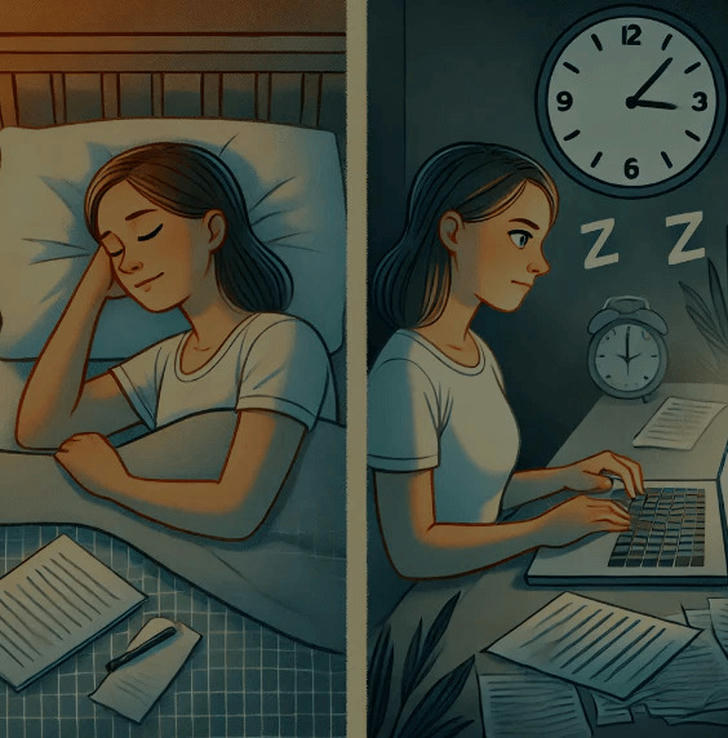
⏰ Circadian Rhythm: Your Biological Productivity Blueprint
Your suprachiasmatic nucleus (SCN) – the brain’s master clock – uses light cues to synchronize bodily functions. Early risers leverage this system for:
✅ Peak Cognitive Performance
Morning light exposure triggers cortisol release at optimal levels, enhancing alertness. Studies show 6-9 AM focus periods yield 28% higher problem-solving accuracy than post-8 PM work. Additionally, engaging in tasks aligned with your natural circadian rhythm can enhance creativity, allowing for innovative ideas to flourish during the early hours.
✅ Dopamine Regulation
Dawn light stimulates dopamine production, improving motivation. Night owls experience 19% lower dopamine reception sensitivity, reducing task persistence. This decrease in sensitivity can lead to a lack of motivation to tackle daily responsibilities, creating a cycle of procrastination and stress.
🔍 The 90-Minute Rule: Waking at 5-6 AM aligns with natural body temperature rise, making alertness effortless compared to forcing focus during the circadian dip (2-4 PM). This principle suggests not only optimizing wake time but also scheduling mentally demanding tasks according to one’s own biological clock.
📉 The Hidden Costs of Night Owl Culture
While 75% of men stay up for sports and 71% of women for reading, late nights sabotage success:
⚠️ Productivity Penalties
- 23% slower cognitive processing after 10 PM
- 34% more workplace errors during night shifts
- 52.6% of nap-takers feel more fatigued post-sleep – a common compensatory tactic
In the competitive world of today, these productivity penalties can translate to thousands of lost dollars for businesses and missed personal opportunities for advancement.
⚠️ Health Repercussions
Chronic night-owl patterns correlate with:
- 40% higher depression risk in women (already 40% more insomnia-prone)
- 29% increased diabetes susceptibility
- Disrupted leptin production causing nighttime overeating
Such health issues can significantly impact one’s quality of life, underscoring the importance of establishing a routine supportive of healthy sleep patterns.
🔁 Retrain Your Rhythm: A Science-Backed 4-Step Transition
#1: Light Anchoring
- View natural light within 5 minutes of waking for 10 minutes (even on cloudy days)
- Use 5000K LED bulbs from 6-8 AM to simulate daylight spectrum
- Consider using a light therapy box during the winter months when daylight is limited, as this can significantly enhance mood and energy levels.

#2: Evening Wind-Down Protocol
- 8 PM: Cut caffeine (half-life: 5-6 hours)
- 9 PM: Blue-light blockers + "analog hour" (physical books/meditation)
- 10 PM: Cool bedroom to 65°F – triggers melatonin release
Incorporating relaxation techniques, such as gentle yoga or deep-breathing exercises, during this wind-down period can strengthen the transition to sleep.
#3: Leverage "Power Hours"
Capitalize on peak biological times:
- 5-7 AM: Deep work requiring intense concentration
- 7-9 AM: Collaborative sessions (brainstorming, meetings)
- 11 AM-1 PM: Administrative tasks
Being aware of your biological prime time can help streamline your work schedule, allowing for more efficient use of your time and energy.
💡 The Morning Edge: Where Ordinary Effort Meets Extraordinary Results
Early risers don’t just gain hours – they access optimized brain chemistry. Neuroscience confirms prefrontal cortex engagement peaks before noon, enabling:
- 31% faster complex problem-solving
- 42% higher creative insight retention
- 57% reduction in impulsive decision-making
Phoenix marketer Elena Cruz’s experiment proves it: After switching to 5 AM starts for 90 days, her campaign ROI increased 38% while cutting work hours by 11 weekly. "That quiet dawn focus," she notes, "is where breakthrough ideas live." High achievement requires capitalizing on both mental prowess and time management.
🎯 Your Action Protocol:
- Track sleep for 72 hours using any basic fitness tracker
- Calculate your current sleep efficiency: (Hours slept / Time in bed) x 100
- Implement one circadian-aligned habit this week (e.g., 15-minute morning sunlight)
- Measure productivity shifts using a simple 1-10 focus scale
The data is unambiguous: Cities with later wake times (e.g., Phoenix at 7:31 AM average) show significantly higher sleep deprivation than early-rising Denver. Your biology rewards dawn alignment with sharper cognition, emotional balance, and tangible results. Embracing the morning can yield unparalleled advantages in your personal and professional life. The sunrise advantage awaits – will you claim it?
Note: All statistics sourced from NSF, CDC, and peer-reviewed chronobiology studies.