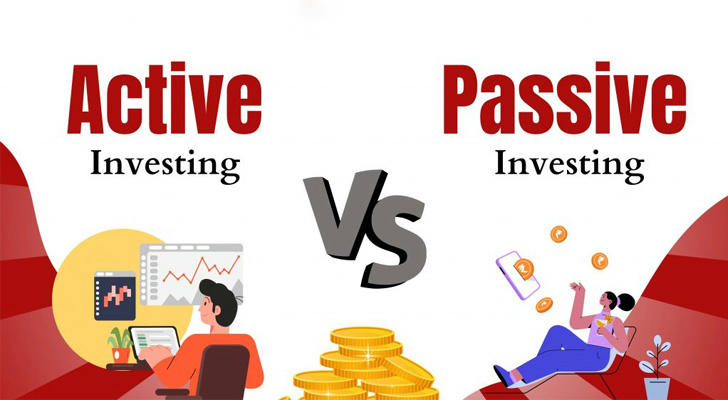
The Passive vs Active Debate: Where Smart Money Is Moving
For decades, investors have debated a fundamental question: is it better to invest passively—through broad, low-cost index funds—or actively—by picking stocks and attempting to beat the market? In 2025, this question is more relevant than ever. With new technologies, shifting market dynamics, and evolving investor preferences, the passive vs. active debate has entered a new phase. But where is the so-called "smart money" actually going?
Let’s explore how this age-old debate is unfolding in today’s investment landscape, and what it means for everyday investors.
What Is Passive vs. Active Investing?
Before diving into the current trends, it's important to define the two strategies:
Passive Investing involves buying and holding a diversified portfolio, often through index funds or ETFs that track a market benchmark (like the S&P 500 or Nasdaq-100). The goal is to match, not beat, the market. It emphasizes low fees, long-term growth, and minimal trading.
Active Investing aims to outperform the market. This strategy includes mutual funds, hedge funds, and individual investors who research and pick specific stocks, sectors, or assets they believe will perform better than average.
Historically, most active managers have struggled to consistently beat passive benchmarks, especially after accounting for fees. This has led to a massive shift toward passive investing—one of the biggest trends in financial markets over the last 20 years.
The Rise of Passive: Still Going Strong in 2025
By 2025, passive investing continues to dominate. According to the latest global investment reports, passive funds now account for over 55% of U.S. equity fund assets, up from about 20% in 2010. The rise of low-cost ETFs has democratized access to diversified portfolios for millions of investors.
Why is passive still popular?
- Low Fees: With management fees often as low as 0.03%, passive funds are extremely cost-effective.
- Simplicity: Passive strategies are easy to understand and require minimal effort.
- Performance: Most active managers still fail to beat their benchmark over the long term.
- Long-Term Thinking: Passive investing aligns well with long-term financial goals, like retirement planning.
Firms like Vanguard, BlackRock (iShares), and Fidelity continue to grow their passive product offerings and dominate inflows.

But Active Investing Is Not Dead
Despite passive’s dominance, active investing is far from obsolete. In fact, in 2025, it’s undergoing a quiet transformation—driven by new tools, a changing economic landscape, and increased market complexity.
1. Active is Getting Smarter
Artificial intelligence (AI), alternative data, and algorithmic tools are now widely used by active managers. These technologies help investors analyze vast data sets, identify inefficiencies, and react to market changes faster than ever.
Smart beta strategies, which blend passive indexing with active rules (e.g., weighting by volatility or quality rather than market cap), are increasingly popular in 2025. They aim to offer the best of both worlds: passive structure with active outperformance potential.
2. Volatile Markets Favor Active Managers
Periods of volatility and market disruption—such as those seen in 2022–2023—tend to favor skilled active managers. In 2025, as central banks adjust interest rates, inflation continues to fluctuate, and geopolitical risks rise, many believe there is more opportunity for selective outperformance.
Active managers can also avoid overvalued stocks or risky sectors, unlike index funds which must include them.
3. Customization and Niche Opportunities
Wealthy investors and institutions are still turning to active strategies for specialized goals—whether it’s ESG (environmental, social, and governance) impact investing, emerging market exposure, or private equity. These areas are difficult to replicate with simple passive funds.

The Hybrid Approach: A Popular Middle Ground
A growing number of investors are choosing hybrid or core-satellite strategies in 2025. This involves:
- Using passive funds as a core (e.g., broad-market ETFs covering U.S. and global equities).
- Adding active “satellites” (e.g., actively managed funds or individual stocks) around the core for potential outperformance.
This approach balances long-term stability with tactical flexibility, and it’s being embraced by both financial advisors and DIY investors.
Where Is Smart Money Moving in 2025?
The term “smart money” often refers to institutional investors, hedge funds, and large asset managers—players with significant resources and expertise. Here’s what they’re doing in 2025:
- Blending Strategies: Most are no longer strictly “passive” or “active.” They combine both, supported by advanced analytics.
- Factor Investing: Strategies based on proven factors (e.g., momentum, value, low volatility) are growing in popularity.
- Private Markets & Alternatives: Many are shifting capital toward alternatives like real estate, private equity, and infrastructure, areas less accessible to passive vehicles.
- Sustainability Focus: Smart money is increasingly directed toward ESG-aligned investments, both active and passive, as climate and governance risks become more material.
What Should Individual Investors Consider?
While Wall Street evolves, retail investors still face a personal choice. Here are some questions to help guide that decision in 2025:
What’s your investment time horizon?
- Long-term goals usually favor passive strategies.
How much time and skill do you have?
- Active investing requires research, discipline, and sometimes luck.
Are you looking to outperform or just grow steadily?
- Chasing outperformance can be rewarding but risky.
Do you care about specific themes or sectors?
- Active funds offer more flexibility in tailoring exposure.
Conclusion: The Debate Evolves, Not Ends
The passive vs. active debate in 2025 isn’t about choosing one over the other—it’s about understanding your goals and risk tolerance, and using the best tools available. Passive strategies offer simplicity and low cost, while active strategies can provide flexibility and potential alpha—especially with the help of modern technology.
Ultimately, the smartest money in 2025 isn’t picking a side. It’s adapting, evolving, and blending strategies to build resilient portfolios in a complex world.